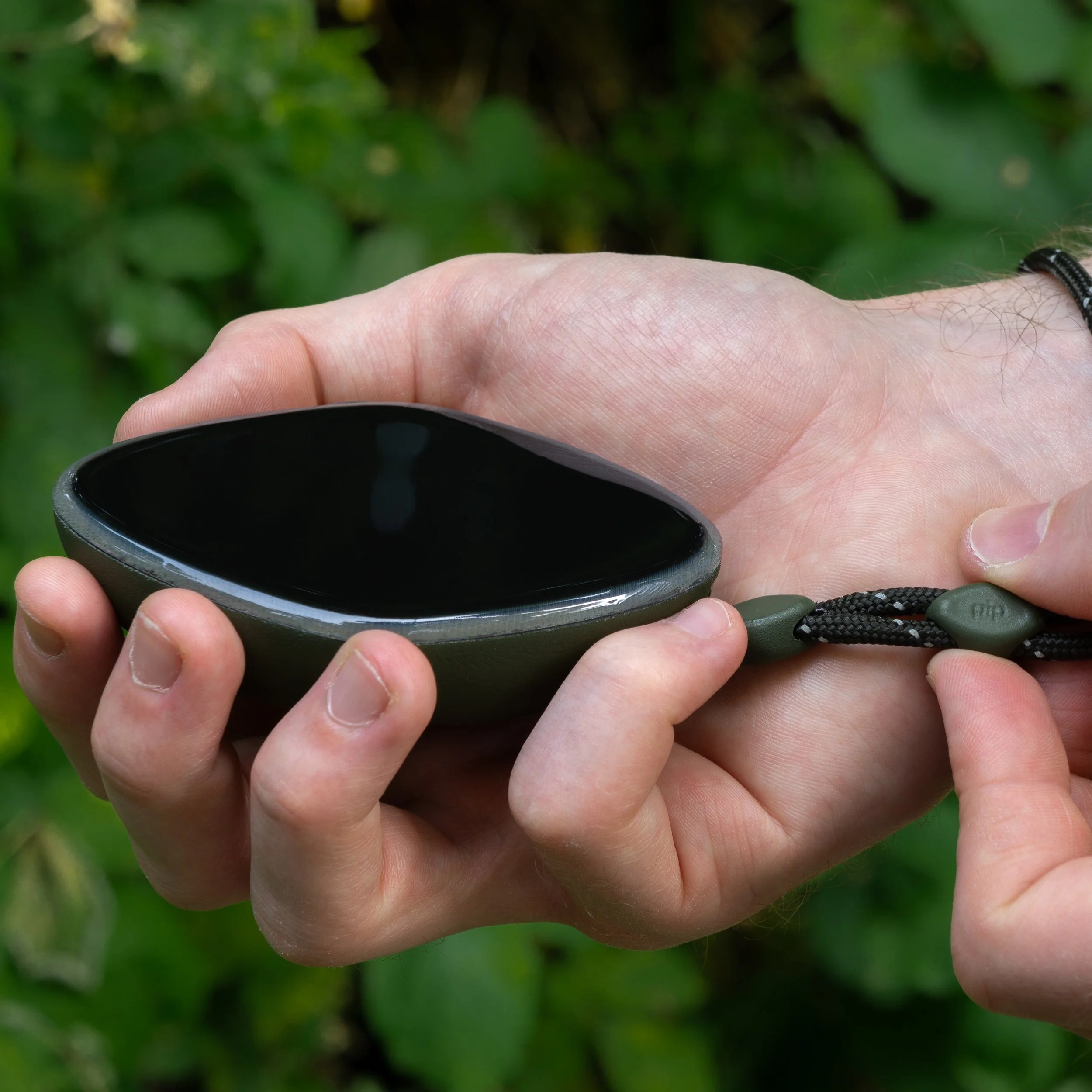
My major project. Exploring how product can help encourage physical exercise to help maintain and improve positive mental health. This project went on to exhibit at New Designers 2025.
Pip.
Project Level: Level 6.
Length of Project: 5 months.
Year: 2025.
What needs exploring?
A simple walk in the Peak District with a group of friends encouraged open conversations about mental health, using the outdoor environment as an opportunity to check in with one another. Following the walk, many commented on how much better they felt as a result of both the time spent outdoors and the opportunity to discuss how they were feeling.
This led to exploring the relationship between mental health and physical exercise. My research identified several concerning statistics and discovered a gap in the market for products that actively encourage physical activity as a means of improving and maintaining positive mental well-being.

“Adding just one hour of walking per week will cut your risk of depression by 50%” (Clear, 2013)
“CALM receives 28,000 calls to their helpline every month. These calls can include topics from anxiety and depression to the likes of money worries and relationships, highlighting how many triggers there can be on our mental health.” (Life-Saving Stats, n.d.)
Concept exploration.
I wanted the product to be a pocket-sized hand-held device, so I explored a range of form concepts. The designs balanced a technical aesthetic with comfort and reassurance, while remaining compact and easy to carry.
Hands on.
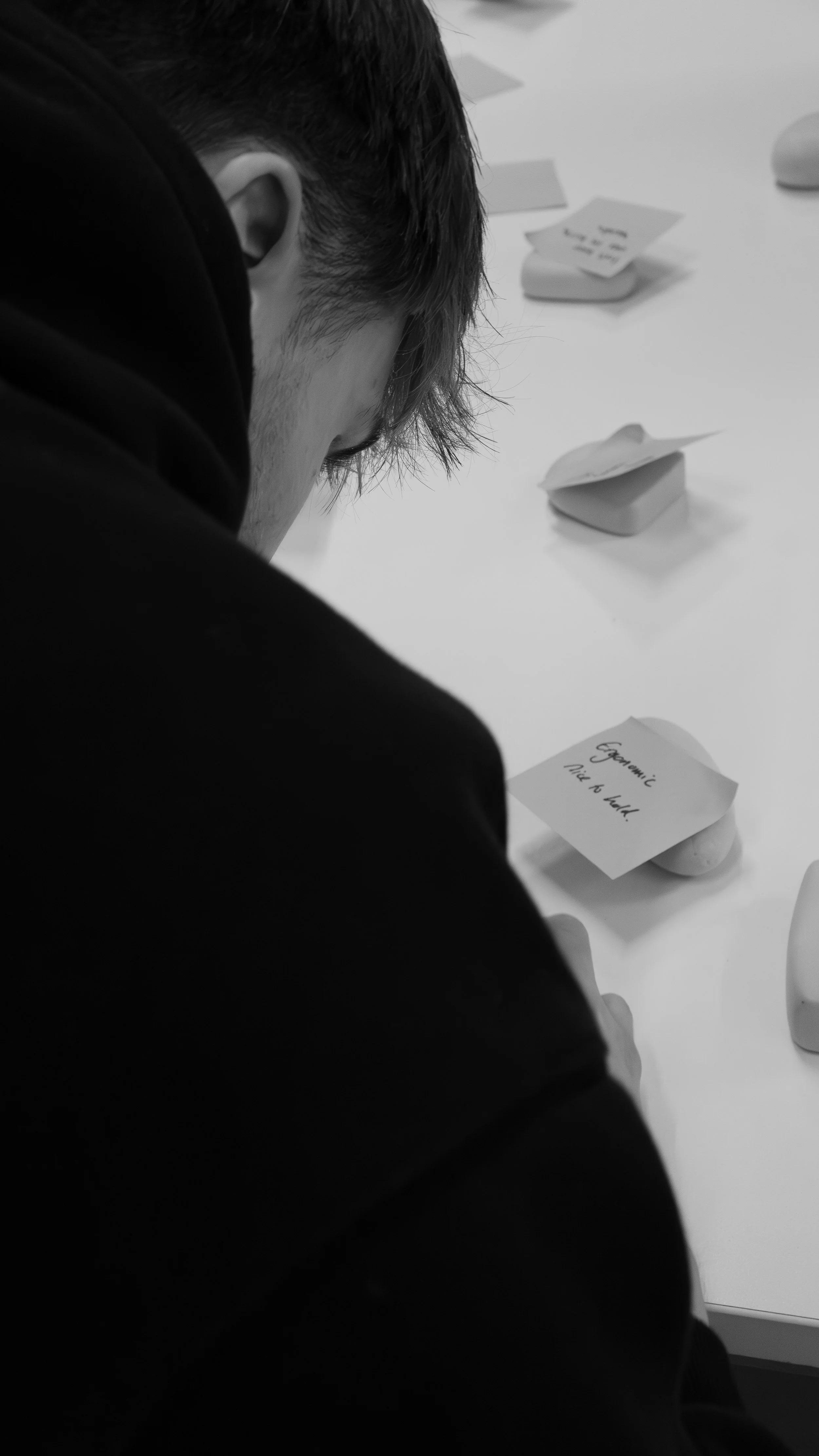
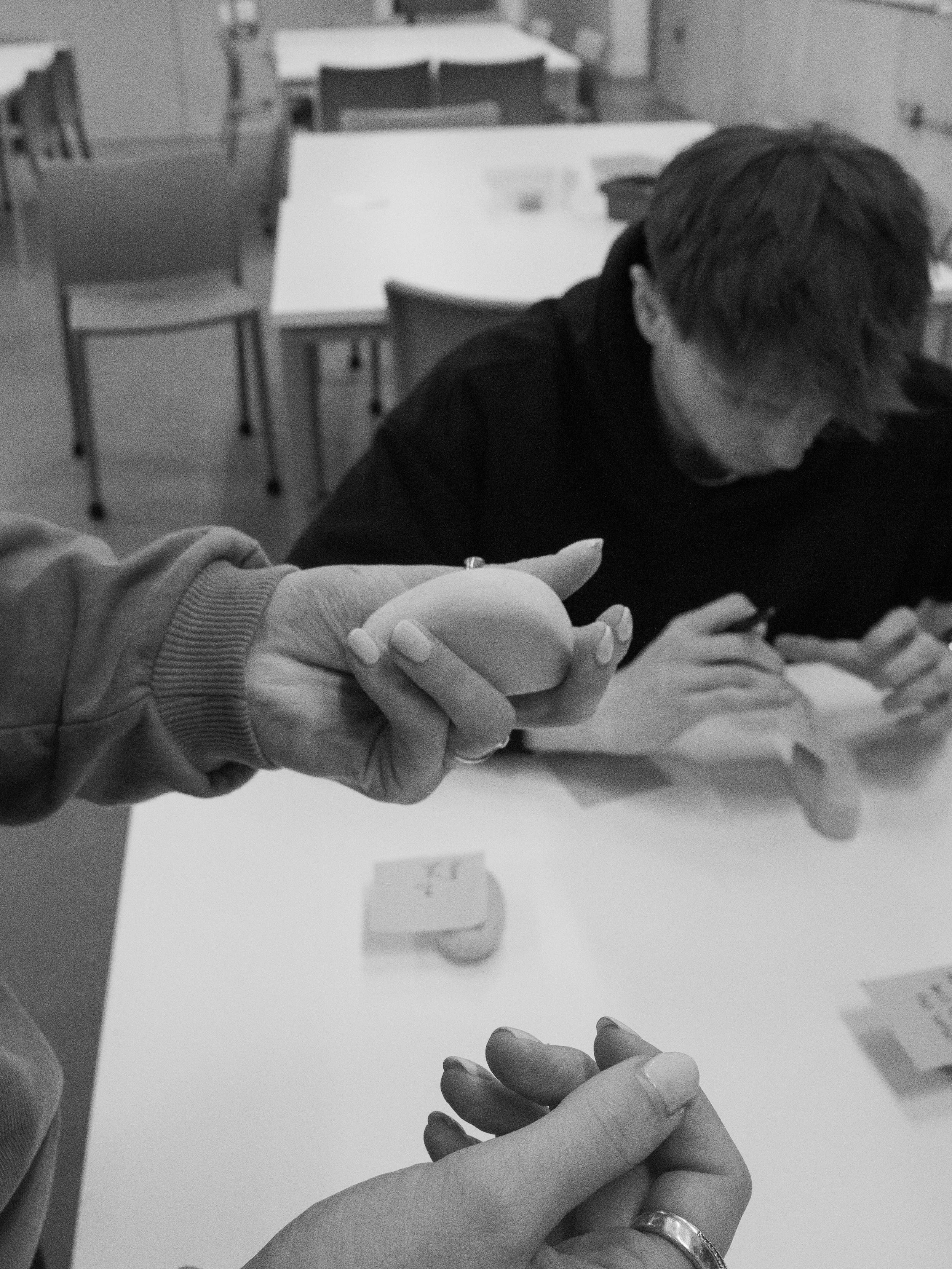
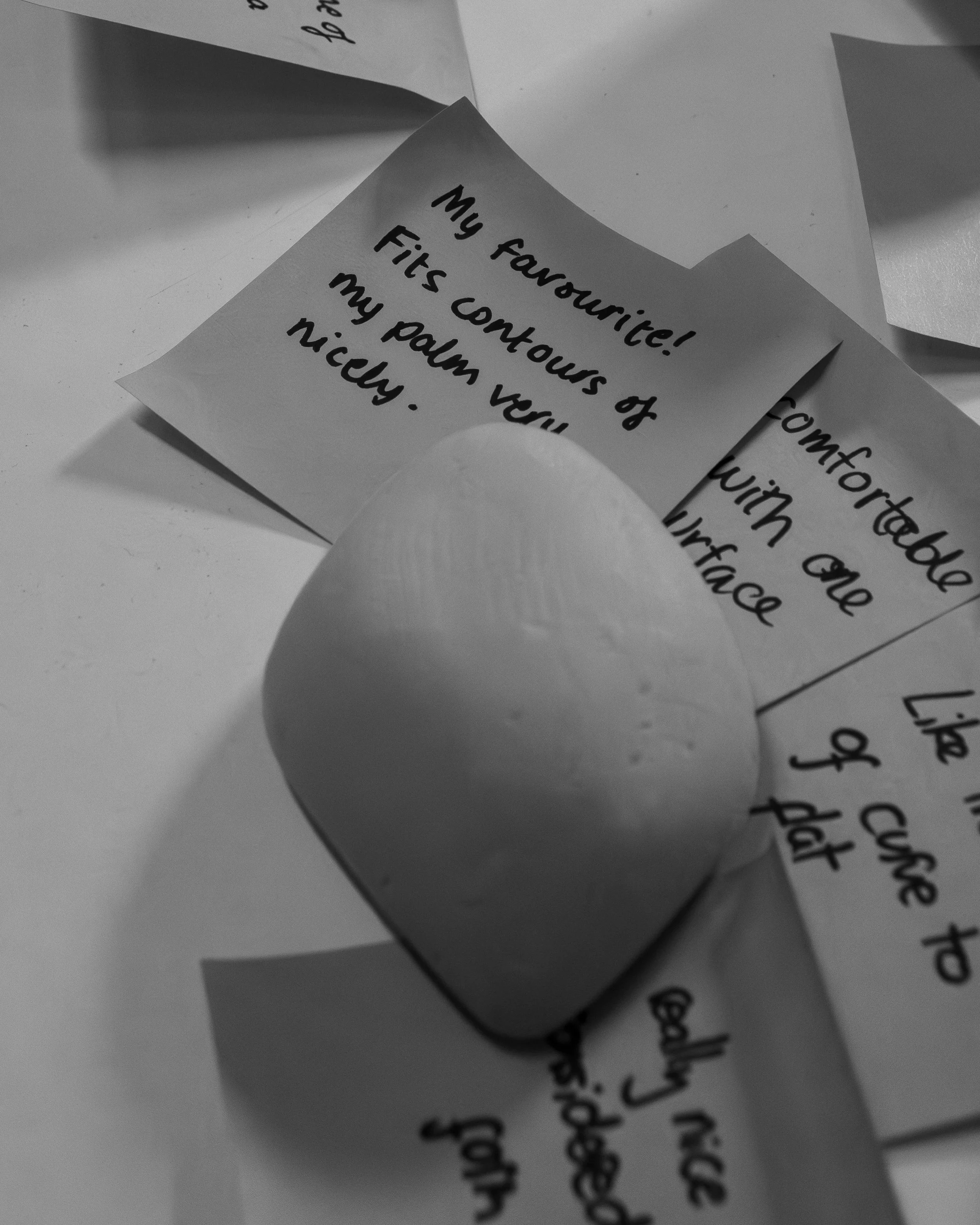
Developing a series of rapid prototypes and evaluating them through user testing provided valuable feedback, helping to identify the forms that best conveyed a sense of safety, comfort and personal connection.
Humanising technology.
Recognising that technology cannot truly embody human emotion, I explored how an interface could communicate more human characteristics through its interactions and behaviour.
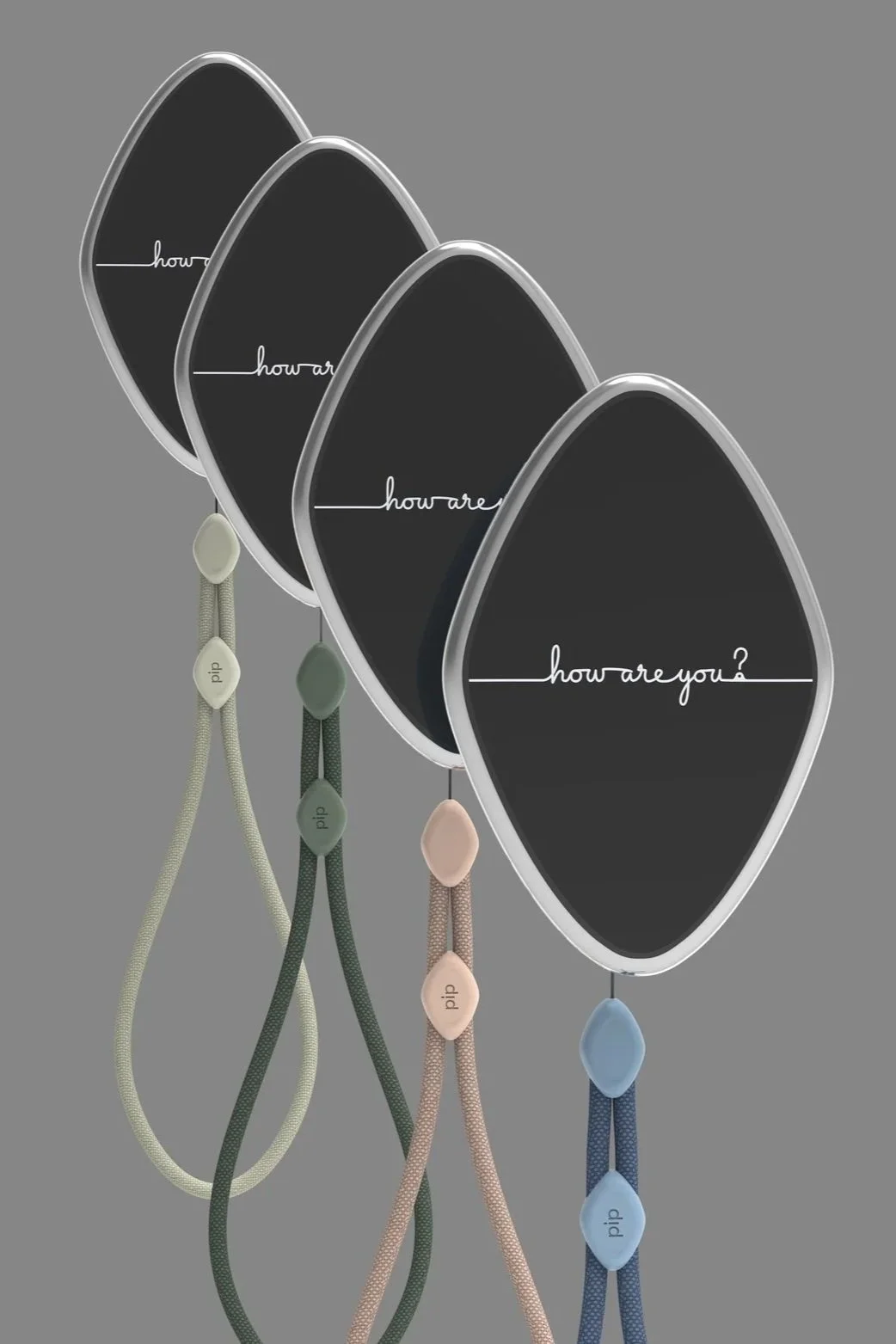
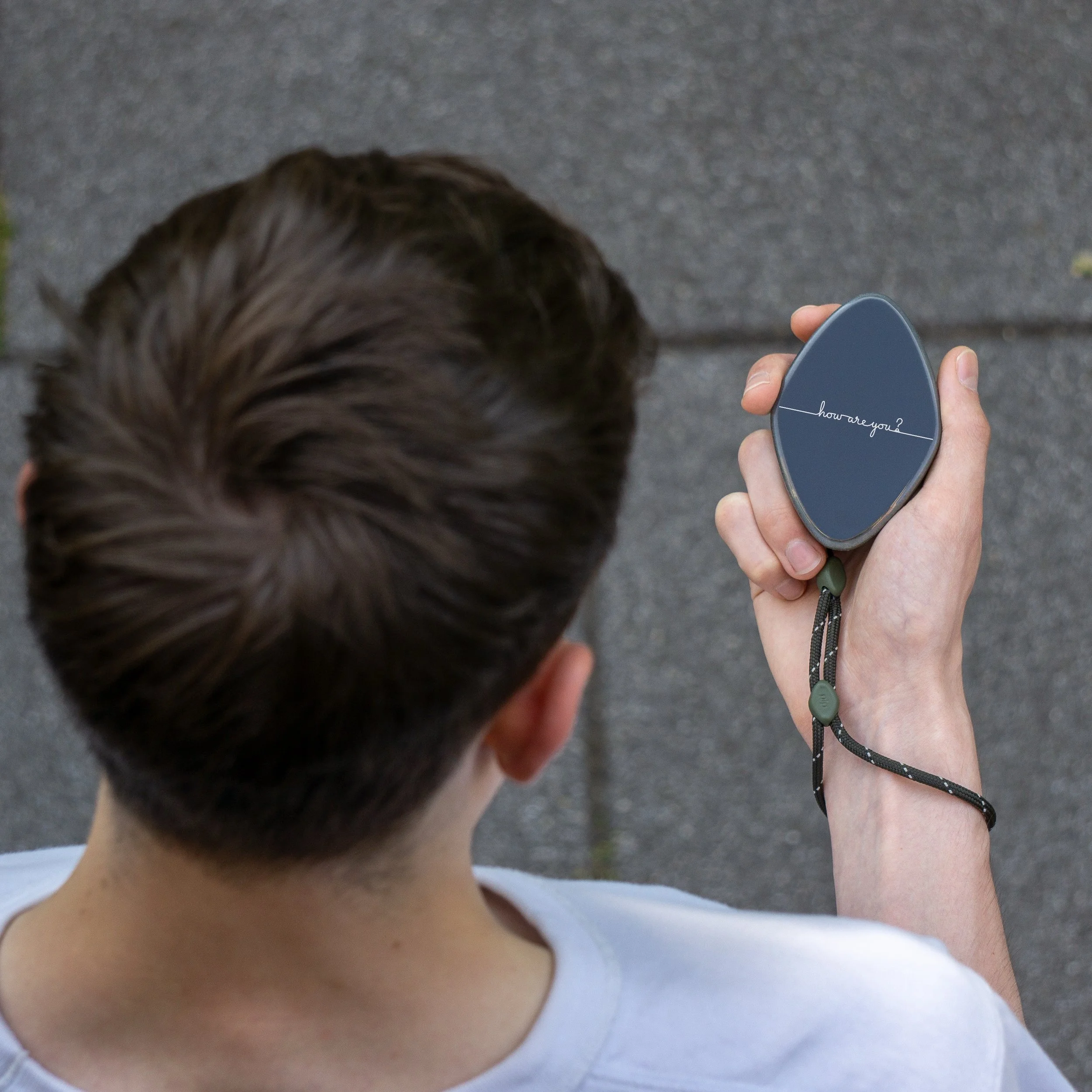
The concept was simple: check in with users throughout the day using the sincere and open-ended question, “How are you?”. Based on their response, Pip recommends a short, medium or long walk tailored to their current location.
Mapping user journeys, testing interactions and developing interface mock-ups allowed me to create a simple and intuitive experience. The interface centres around a single animated line, using movement to give the product personality, character and a sense of life.
“Why not just make it an app on your phone?”
This was a common question I was asked throughout my project journey and when exhibiting at New Designers.
While a valid question, my research phase highlighted the fundamental impact phones have on our mental health. Creating distraction, the comparing to people’s lives they portray on social media and isolating us from our real world surroundings.
The decision to create a device with the sole purpose of aiding maintaining positive mental health allowed me to remove distraction and give people the opportunity to live in the moment and offer them a product dedicated to their mental well-being.
Performance driven development.
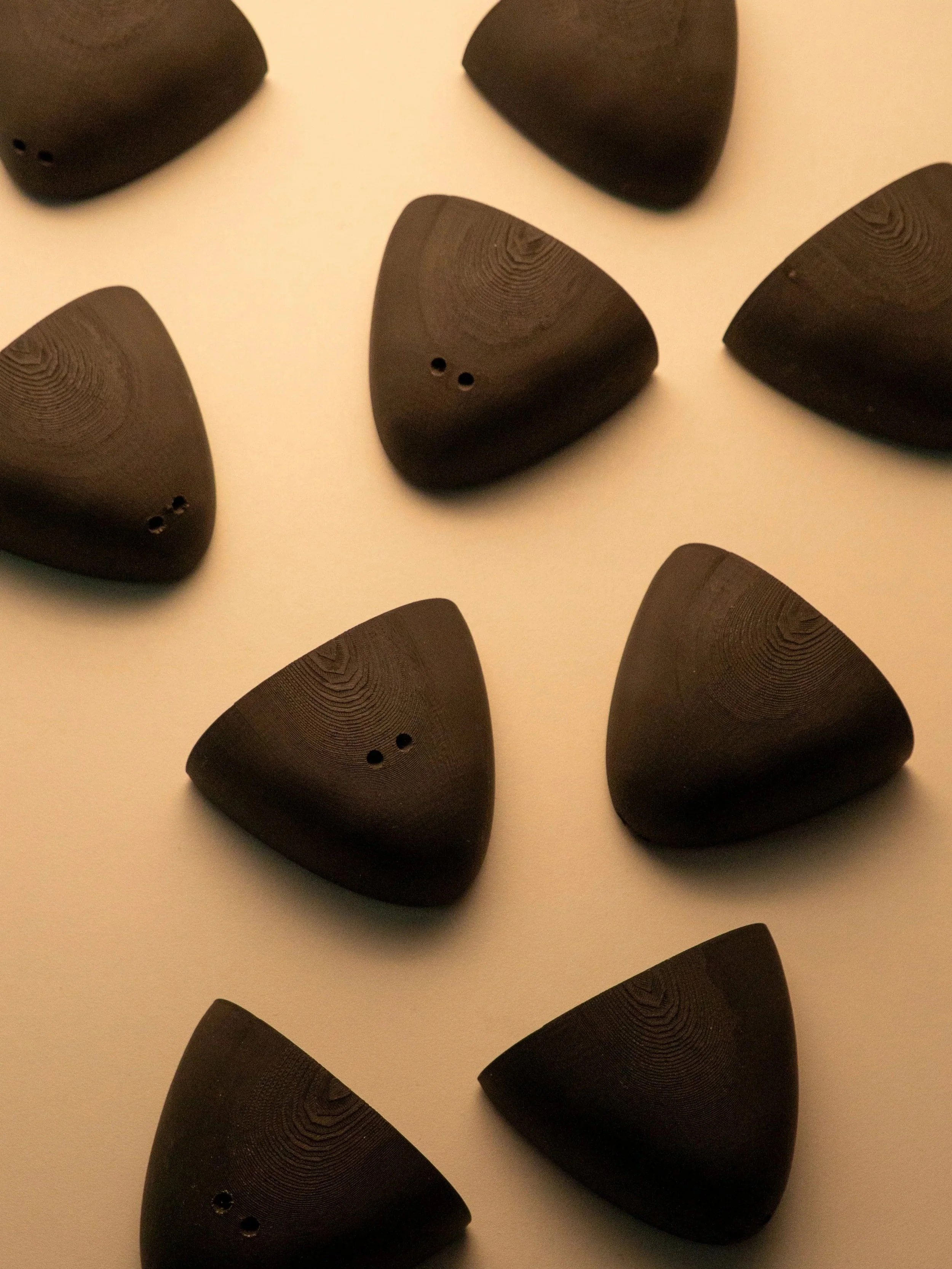
Applying the smaller details as well as making finalised decisions. This development phase saw me alter the form slightly, making it more comfortable as well as identify internal componentry to achieve a strong technical product.
Designed for connection.
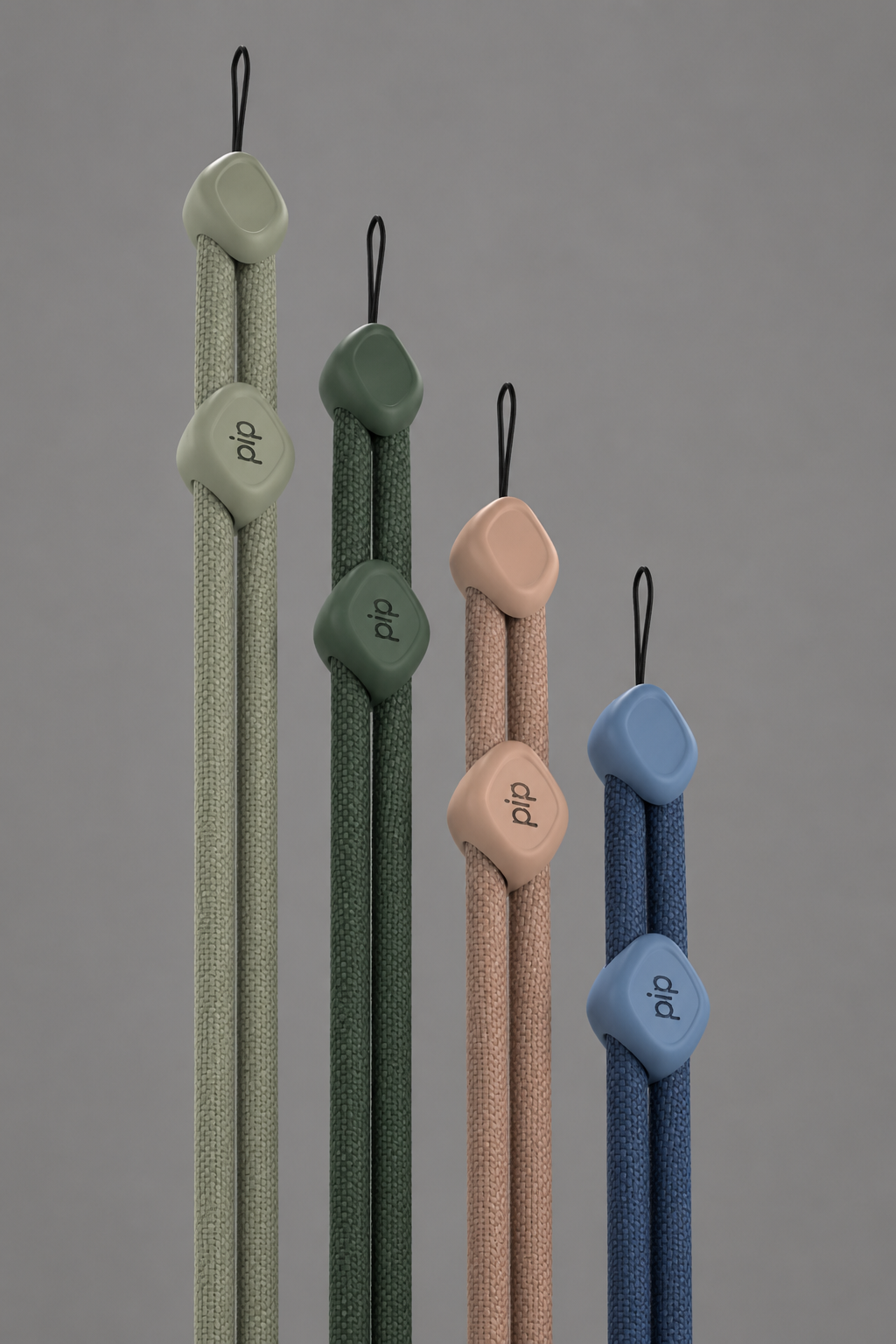
Applying the product with an optional hand strap opportunity brought vast advantages to the product including versatility, security and enhancing connection between user and product.
From attachment position on the product to strap length and slider form, this gives users option to customise the product to their needs and comforts.
Branding with care.
Brand identity was central to shaping the final product. Pip became the name of the product, offering a more human and approachable feel, helping it feel familiar and supportive rather than just another screen-based interaction.
A subtle embossed logo on the strap slider reinforces the identity, while soft pastel colours help create a welcoming appearance that supports the product’s function without drawing attention away from the user experience.
Technical blueprints.
Designed with manufacture in mind, supported by detailed engineering and component-level analysis to ensure every aspect of the product has been carefully considered for efficient production and assembly.
Final outcome.